Welcoming the Winterbourne: How I Turned a Hidden Chalk Stream into Children’s Heritage Through Story, Song, and Ritual.
A case study in community arts meets nature conservation—securing funding, working with schools, and creating something lasting that reconnects young people to their local landscape.

This piece is for folks in community arts, applied theatre, conservation charities (hello, Wildlife Trusts!), heritage groups, and environmental educators. If you’re exploring ways to blend creativity with ecological restoration and heritage reconnection, read on. I’d genuinely love to hear about your similar projects—successes, hurdles, and funding wins. Drop a comment below.
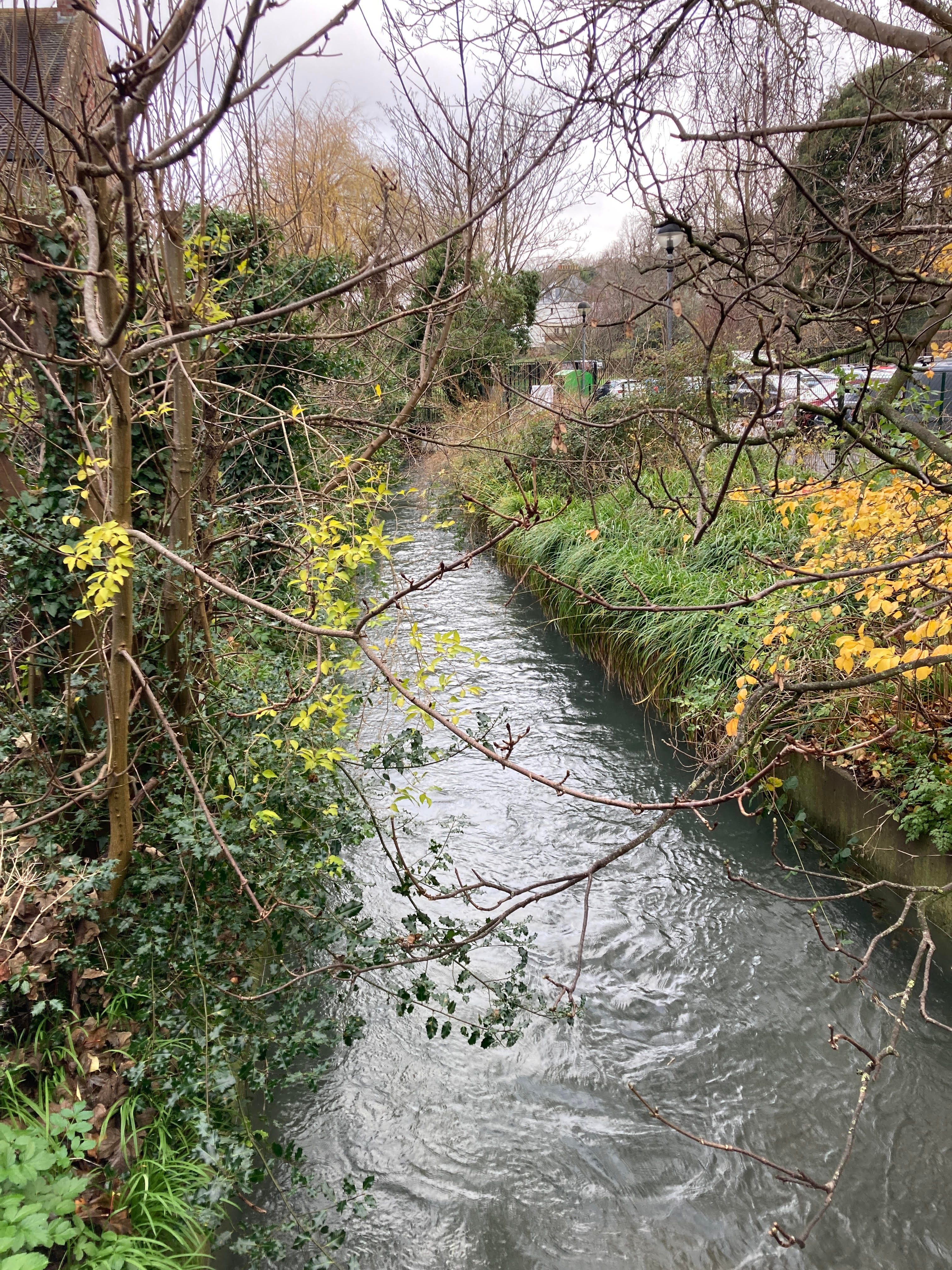
The Spark: Discovering a Stream I’d Walked Past for 25 Years
It started innocently in 2024 during volunteering at Anne of Cleves House in Lewes. A fellow volunteer mentioned the garden once bordered the Winterbourne stream—now cut off by a school. I learned “Winterbourne” means a stream that flows only in winter, from the Anglo-Saxon “bourne” for stream. I’d lived in Lewes on and off for 25 years and had no idea.
I walked its route—from near the source by the A27 to its confluence with the River Ouse at Railway Land—snapped a photo in full flow, and shared it on Facebook. The response floored me: half the locals knew almost nothing; the other half flooded in with childhood memories of playing in the (mostly dry, concreted-over) bed, plus historical nuggets.
That mix of ignorance and nostalgia screamed project potential. I envisioned a multi-generational procession along the stream: stories, songs, ending in a celebratory blessing to “wake” its spirit. Inspired by Bruce Chatwin’s The Songlines, I wanted to keep heritage alive through oral tradition—imagining ancient voices since the real ones are lost to time.
From Crazy Idea to Funded Reality
I pitched it everywhere. Most smiled politely. The breakthrough: Helen Browning-Smith at Lewes District Council connected me to Natasha Padbury at Love Our Ouse. Natasha got it instantly. Coincidentally, she was planning the Winterbourne Festival and folded my idea into her Changing Chalk Community Grant bid (via National Trust/National Lottery Heritage Fund). We secured funding—huge thanks to Natasha for including me.
My project wasn’t public-facing (we needed time to build an ensemble), so it sat alongside the festival’s main events. Serendipity struck again: Western Road School, right on the stream, became our partner. I love working with juniors—energetic, open, and brilliant at surprising everyone with what they achieve.
How We Built It: 10 Weeks of Habitat, Stories, and Ritual
After-school sessions at the school: easy recruitment, perfect venue.
Weeks 1–3: Habitat deep-dive—unique chalk stream flora/fauna, aquifers, boreholes, why chalk streams are globally rare and vital.
Story & Play Development: Split into two groups to devise short plays tracing the stream’s “life”—birth, journey through Lewes, and human interactions.
Narration & Science: We wove in how the stream “bounds” through town, pagan-inspired rituals for a blessing.
Poetry & Performance Elements: Kids wrote free-form poems (one gem below). We crafted a candlelit procession, altar, wishes/tokens as “sacrifices,” and a dance invocation to the stream’s spirit.
A beautiful child’s poem:
The Wonderful Winterbourne
Gushing and glinting on a cold winter’s day
Happiness floating along all the way
Magical waters twinkling joyfully
Birds singing songs, quietly merrily
Frogs leaping high, Kingfishers dive low
Thin-lipped grey mullets swishing their fins
Peregrine falcons flapping their wings
So many luscious plants by the wonderful Winterbourne
So much commotion in the wonderful Winterbourne
What a wonderful Winterbourne
The Sharing: Food, Folk Music, and Full Ownership
Parents love seeing results—so I make sharings memorable: brownies “gifted by the stream’s spirit,” English folk playlist, audience warm-up games to join in.
Kids led everything—costumed in capes, headdresses, carrying candles/holders/props home, plus scripts and poems packed with stream knowledge. I stepped back; it was theirs.We couldn’t go fully outdoors (weather + young kids = risky rehearsals), so indoor with planned audio in mind.
Bonus: Capturing It for Posterity
Deputy Head Raya Hamilton suggested recording. No budget, but Starfish Studios’ Iain Paxon stepped in affordably. Kids visited for a chaotic-but-magical session. Audio suits the theatre better than video—script written narratively. Listen here: [insert your link]. Great showcase for children, parents, school, and my work.
Listen to the recording on Soundcloud.
Reflections & What I’d Tweak Next Time
Rusty after a break from managing projects, I would’ve structured play creation more tightly (lines vs. improv balance is tricky at this age). Guided poetry prompts with keywords would’ve helped some kids.
But overall? A triumph. Kids reconnected to a hidden heritage, learned chalk stream ecology, and created art with real impact. It tied into the broader Winterbourne Festival, amplifying conservation messages.
This format—school residencies blending arts, heritage, and nature—works. I’ve got more lined up (Wonderful Woodlands, My Voice in Nature) with tweaks.
Why This Matters for Partners Like Wildlife Trusts
If you’re a conservation org looking for creative, community-engaged delivery—projects that educate, inspire action, and build local stewardship—I’m your collaborator. I’ve got the track record: Lookering on Sussex Wildlife Trust reserves (400+ hours), chalk grassland knowledge, proven funding success, and now delivered school-based heritage-nature projects.
Let’s talk partnerships. Reach out via Substack comments.
With best wishes, Lance